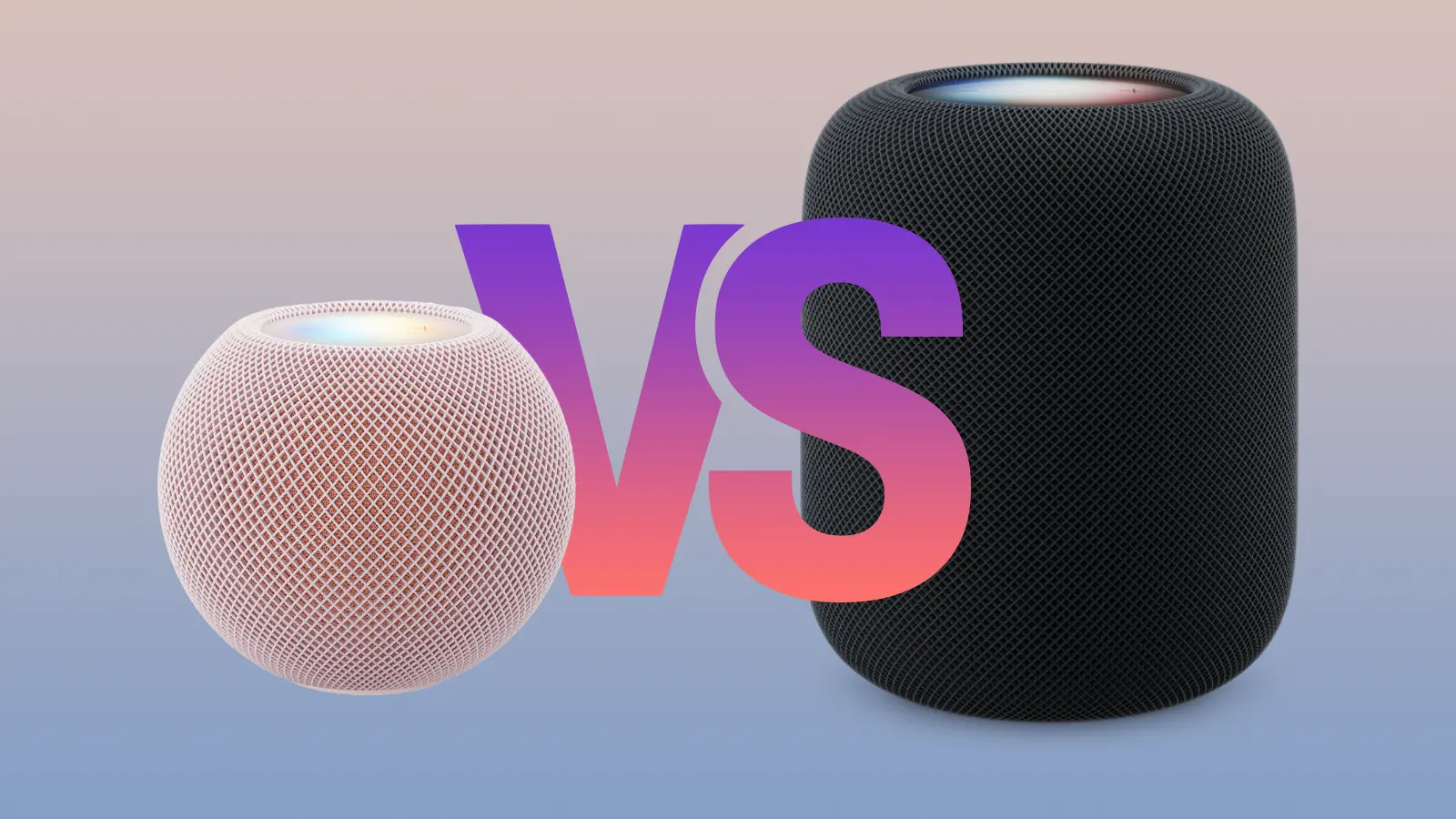
Apple sells two different HomePod models, with a £200 price difference. So, should you go the mini route and save your money or go all-out for the larger HomePod? The answer depends on what you want to get out of your HomePod and how you plan to use it. Use this guide to figure out which one is right for you.
HomePod mini 2
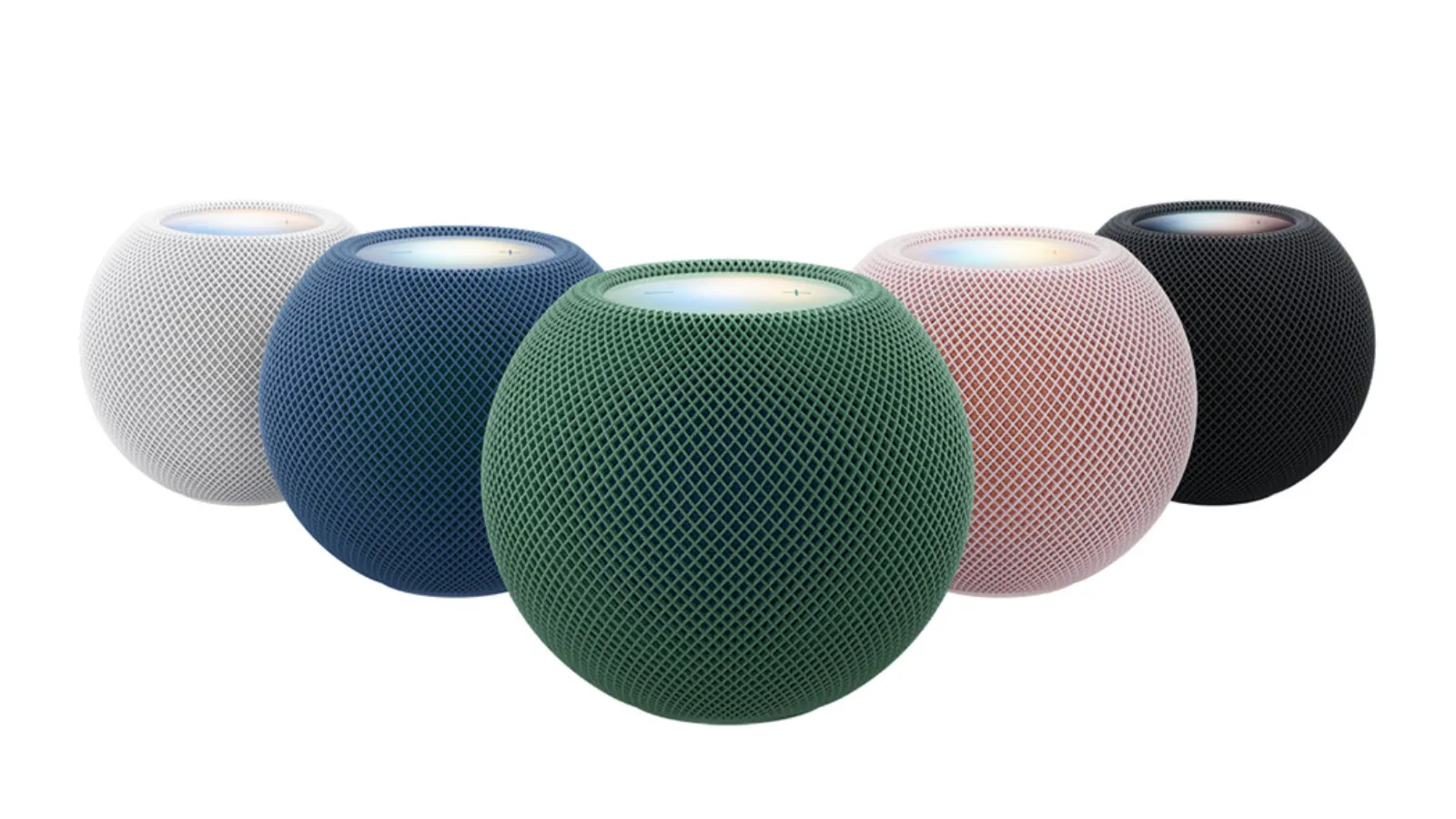
View the full HomePod mini 2 breakdown in our Product Library.
At a Glance
- S10 chip
- Siri AI
- Compact, orb-shaped device
- Full-range driver
- Dual force-cancelling passive radiators
- Stereo pair with Apple TV
- Use as Mac speakers
- Temperature and Humidity Sensors
Use-case
HomePod mini 2 is the best device to get if you're simply looking for a home hub to power your smart home from the Apple Home app. The device has built-in climate sensors so you can view the current temperature and humidity in the room, and get alerts when the HomePod mini detects alarms, such as smoke alarms or carbon monoxide detectors.
Additionally, if you're looking for some high-quality speakers to pair with your Apple TV or Mac, this HomePod is the one to go for as it supports zero latency pairing with Mac, unlike its bigger counterpart. However, for the best surround sound experience with Apple TV the larger HomePod will provide better audio.
Siri AI is enabled on the HomePod mini 2, but not the HomePod. This means if you want the smarter assistant, with personal context and deeper intelligence you have to get the mini.
HomePod (2nd generation)
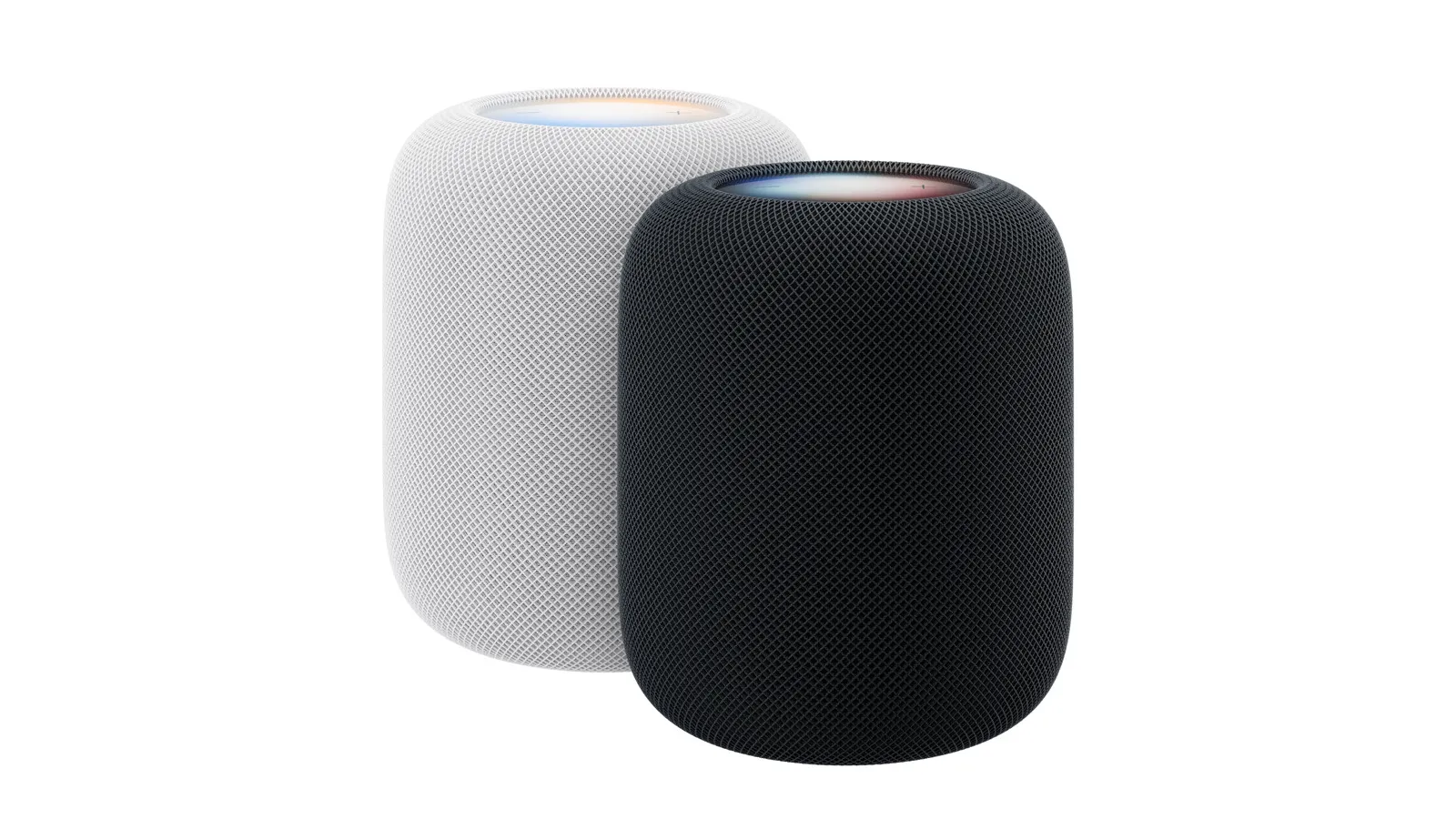
View the full HomePod 2nd generation breakdown in our Product Library.
At a Glance
- S7 chip
- Classic Siri
- Taller, cylindrical-shaped device
- High-excursion woofer
- Five beam-forming tweeter array
- Spatial Audio
- Room Sensing
- Stereo pair with Apple TV
- Pair with Mac via AirPlay, couple seconds of latency
- Temperature and Humidity Sensors
Use-case
The HomePod (2nd generation) is the better choice if you're shopping for a speaker, and regularly listen to music. The £200 premium gets you a drastically improved speaker system, that supports Spatial Audio and Room Sensing, which is where the sound system can automatically adapt based on its physical location. For example, it can direct audio towards the room if sat in the corner against a wall.
However, this device does have its drawbacks. Unlike HomePod mini 2, it cannot be used as a dedicated Mac speaker. Whilst it will be fine for listening to music via AirPlay, a couple of seconds of latency means you will not be able to use it as a speaker when watching content or gaming.
Additionally, you're limited to Classic Siri on the larger HomePod, meaning you'll get less-intelligent responses and will not benefit from the personal context capabilities and deeper intelligence of Siri AI.
To Summarise
If the primary purpose of your HomePod is to play music, or pair with an Apple TV as a speaker system, get the HomePod (2nd generation). However, if you're looking for a simple Home Hub, some external speakers for you Mac, or a small device that sits in the corner of your room that you can ask questions to, get the HomePod mini 2.
Pricing
HomePod mini 2 is £149 / $149 / €169 and released on the 30th October 2026.
HomePod (2nd generation) is £349 / $349 / €399 and released on the 3rd February 2023.