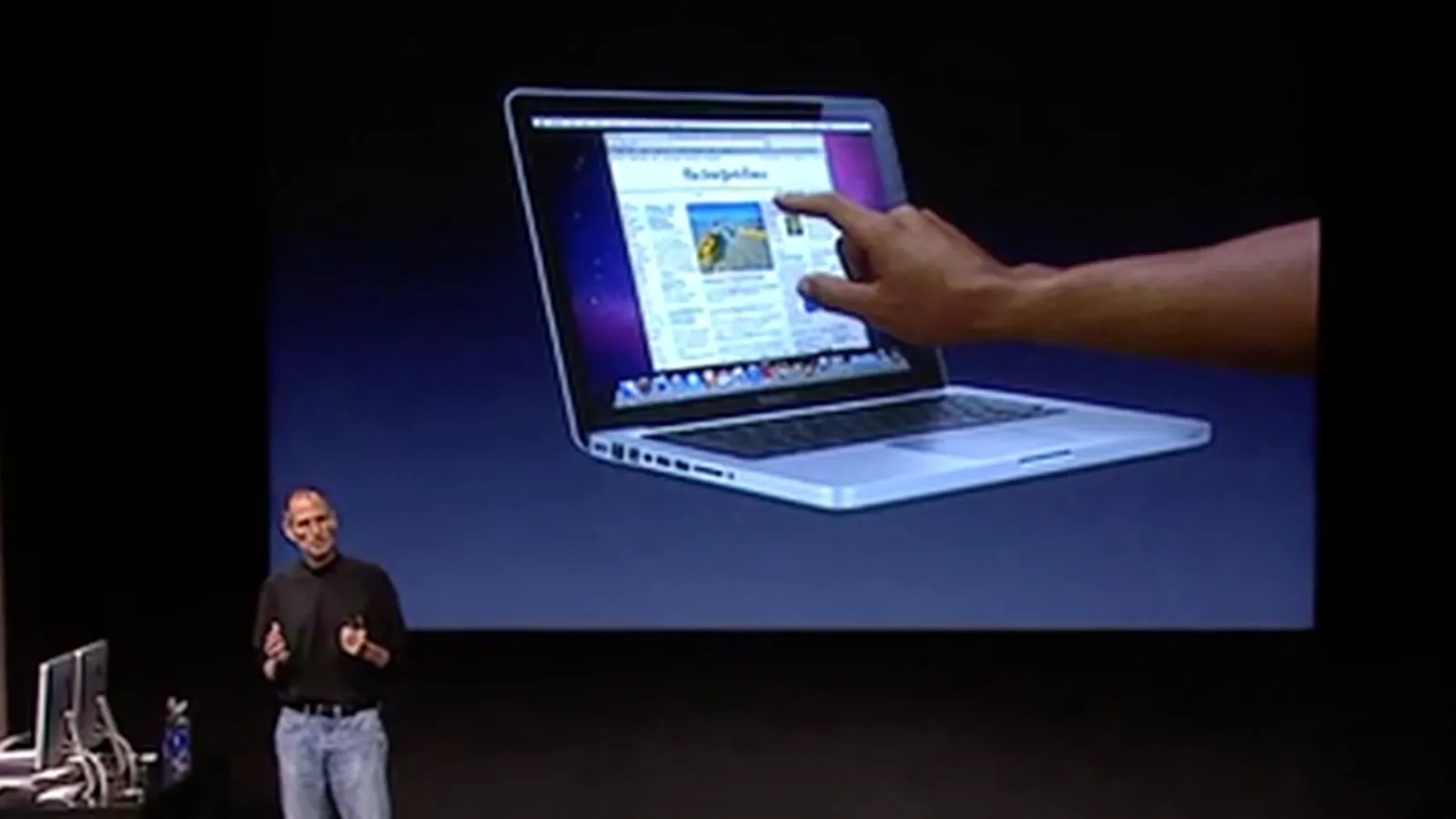
Steve Jobs is known as the visionary Apple co-founder who saved the company from the brink when he returned in 1997. He introduced the iconic iMac in 1998, unveiled the first iPhone in 2007 and followed with the iPad in 2010.
Today, these products remain a big part of Apple, with the iPhone bringing in hundreds of billions of dollars a year. However, since his death in 2011 Apple has backtracked on a few of his product 'rules'.
This is not necessarily a bad thing, as the company continues to mature and expand its market, but many nostalgic Apple fans have a different opinion.
The iPad mini

Steve Jobs was known to publicly oppose smaller tablet models since the introduction of the original iPad in 2010. Back then, Jobs said a smaller iPad would be "dead on arrival" and said that "the 10-inch screen size is the minimum size required to create great tablet apps."
These strong opinions were not just for the public to hear, with an Apple engineer reportedly telling the New York Times that Jobs thought a smaller tablet was only good for surfing the web in the bathroom.
Despite this, we now know that it is very likely Apple was working on a smaller-sized iPad whilst Steve Jobs was still CEO.
The first-generation iPad mini released in October 2012 under CEO Tim Cook, about a year after Jobs' death. It would be unlikely that Apple suddenly changed its mind as soon as Cook became CEO and created the mini in just 12 months.
There are reports of Apple's then marketing chief Phil Schiller exchanging emails with Jobs convincing him that the market wants an iPad mini. Ultimately, it may have been Jobs himself who backtracked his own rule, even if he was no longer around to see the device released.
Larger iPhones
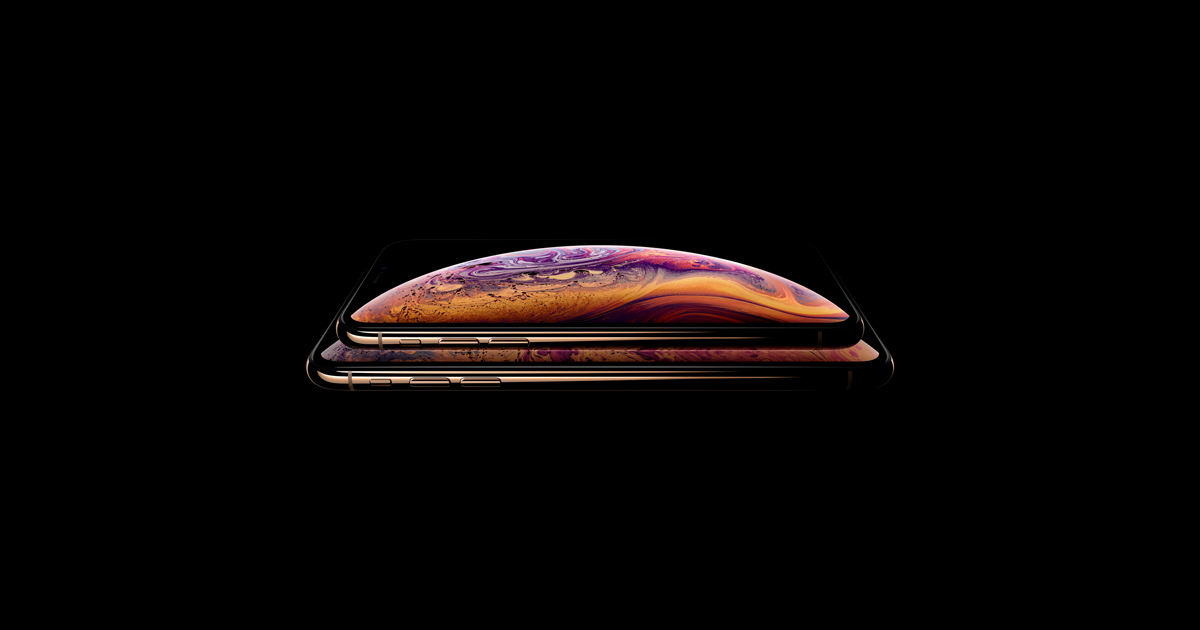
In summer 2010, Apple's flagship iPhone, the iPhone 4, featured a 3.5-inch display. Apple was yet to expand into the larger-screen phone market, and Steve Jobs had his own opinions about larger mobile devices.
He criticised competitors' devices, saying that "you can't get your hand around it" and "no one's going to buy that."
However, since the iPhone 4, iPhones have only got bigger.
In 2014, the iPhone 6 debuted with a full redesign, and a larger 4.7-inch display. The company even went a step further, launching the iPhone 6 Plus with a 5.5-inch screen.
In 2017, Apple's iPhone X introduced an even bigger 5.8-inch screen, with a 6.5-inch display following a year later on the iPhone XS Max.
Today, Apple's biggest iPhone screen is over 7-inches when you unfold the iPhone Duo, or 6.9-inches on the iPhone 18 Pro Max.
These are some of Apple's most popular iPhone models, with the iPhone 6 lineup remaining the best-selling iPhone lineup in history. So, it is safe to say Apple did the right thing to backtrack on Steve Jobs’ opinions here.
Apple Pencil
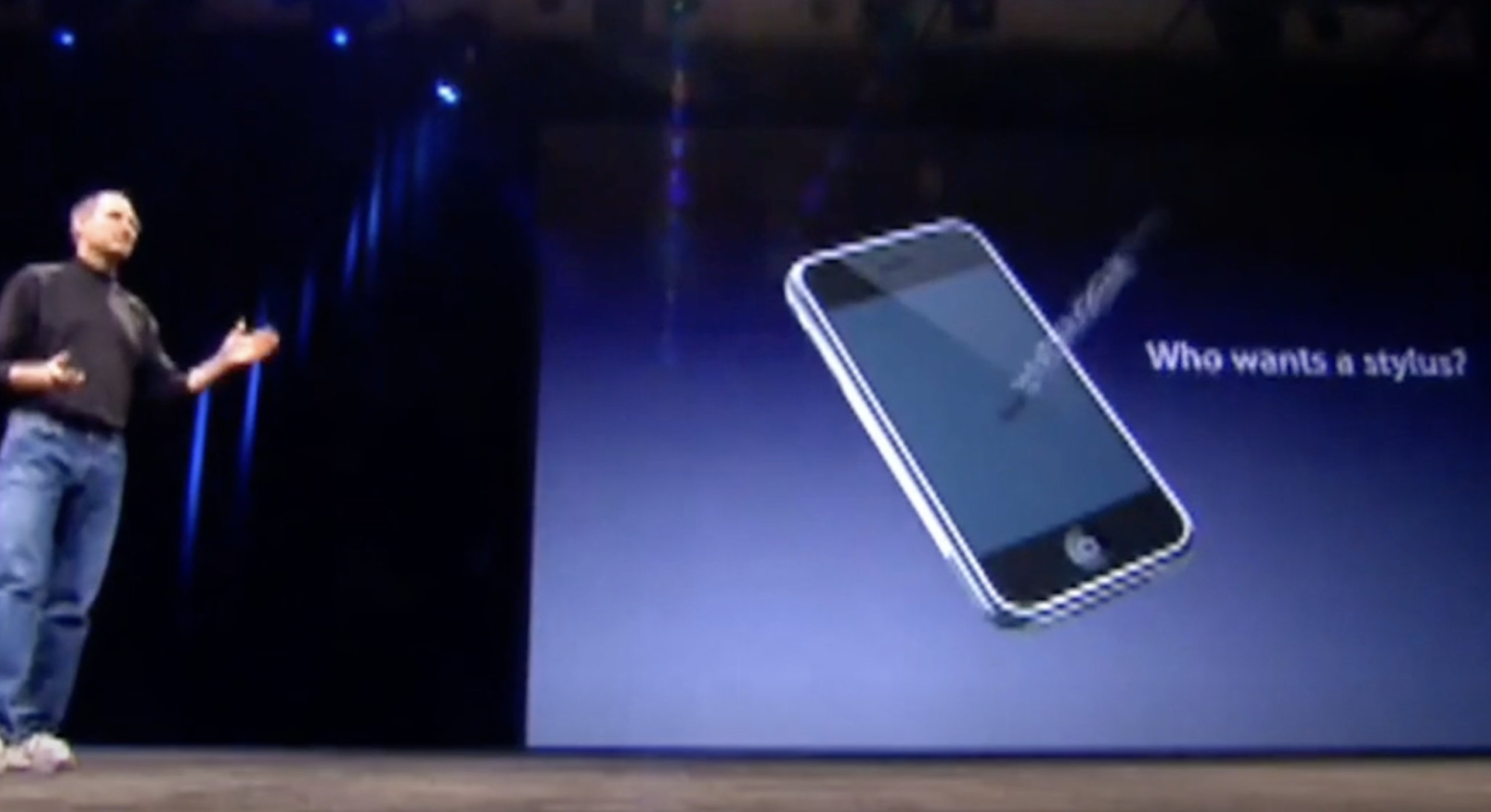
Image Credit: NBC News
One of Steve Jobs’ most famous opinions is that you don't want a stylus, especially with an iPhone.
At the original 2007 keynote, introducing the iPhone, Steve Jobs said:
"Who wants a stylus? You have to get them, and put them away, and you lose them, yuck. Nobody wants a stylus."
As you might expect, Apple did not introduce a stylus for the iPhone or the first iPad in 2010, instead telling users to simply use their fingers.
Eight years after Steve Jobs declared his opinions on styluses, his successor Tim Cook took to the stage at a 2015 keynote and introduced the Apple Pencil.
It debuted with the first-ever iPad Pro, as Apple promoted the pencil as a perk of the higher-end iPad model to draw or sketch on the large display.
Ironically, the first-generation Apple Pencil did not solve Jobs' issues with the stylus. There was nowhere to store it, and many people lost them.
These issues have been solved over time. The 2018 iPad Pro introduced magnetic attachment to the side of the device and the 2024 Apple Pencil Pro introduced Find My to the pencil for the first time.
To further add fuel to the fire, in 2026 Apple introduced the iPhone Duo, which is the first ever iPhone to support a stylus - the Apple Pencil (USB-C). This directly conflicts with Steve Jobs' statement on stage in 2007.
Touchscreen MacBook
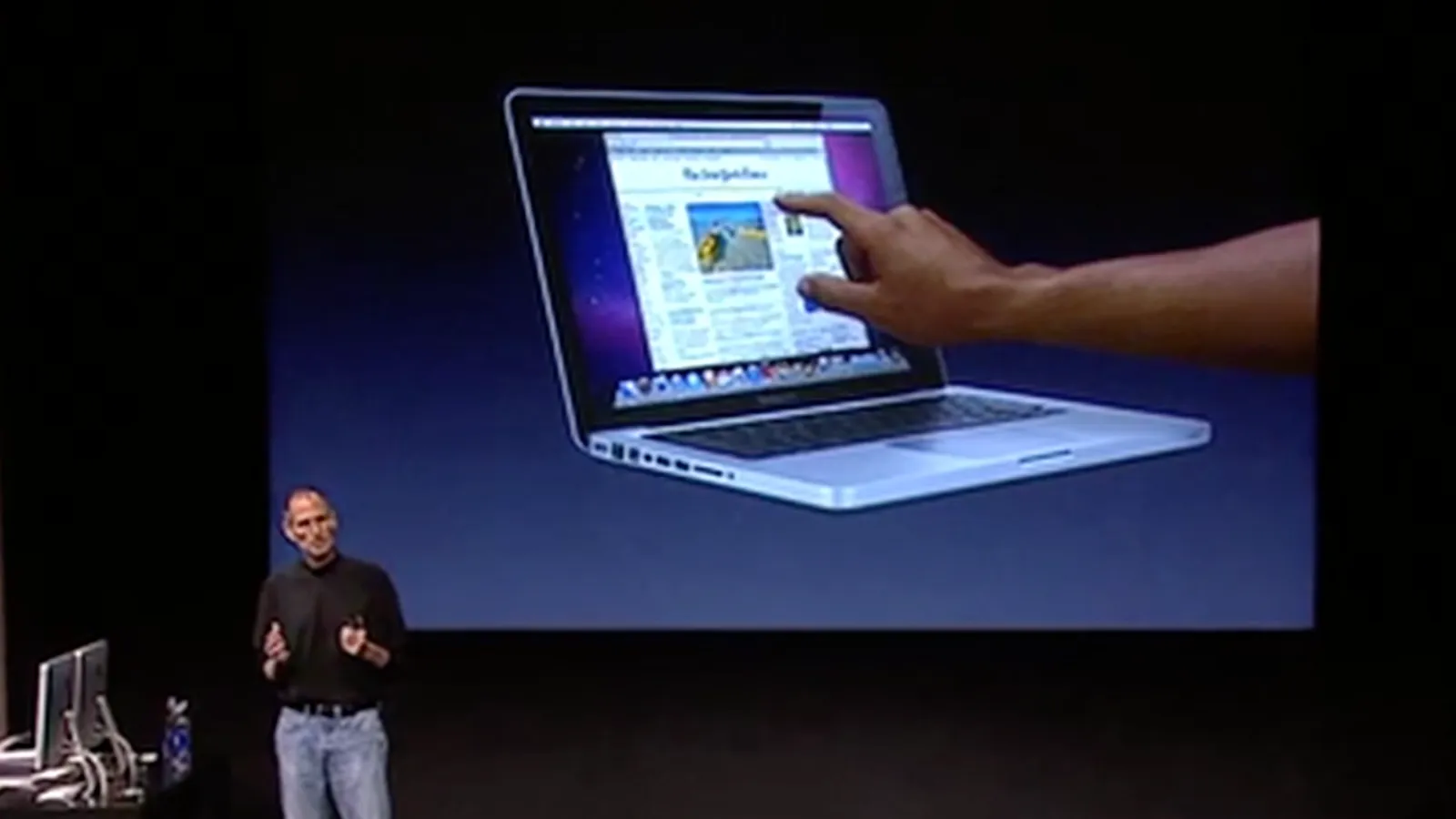
This rule was upheld by Apple for a long time. In 2010, at a MacBook Air keynote, Jobs explained the reasoning behind why the Mac does not have a touchscreen. He called them "ergonomically terrible" and said that Apple had done "tons of user testing and it turns out it doesn't work".
Every Mac to follow for the next 16 years did not have touch displays, and became the only product line at Apple that did not use this technology.
However, in October 2026, this changed following the announcement of the first-ever touch display on a Mac, starting with the MacBook Pro.
This move has been questioned by long-term Mac users who are concerned that macOS becomes a much more touch-focused operating system, just like what Microsoft attempted to do with Windows 8.
Though, Apple has clarified that touch is a secondary input method for the Mac, and that the product line remains primarily a keyboard and mouse experience.
Were these really Jobs' opinions, or simply marketing strategies?
If you look at each of these examples, Jobs either uses his dismissal to promote a new feature they have been working on, or is criticising competitors’ products as you might expect.
When he dismissed the idea of a smaller iPad, his company was trying to sell a larger 10-inch tablet. When dismissing larger iPhones, Apple was trying to sell a smaller 4-inch phone and its larger 10-inch iPad.
With the stylus, Jobs was promoting the new Multi-Touch display technology, that responds to input from your fingers. Similarly, he was promoting the Multi-Touch trackpad on the Mac when dismissing the idea of a touchscreen Mac.
These could all be ways to draw attention to a new technology that Apple had been working on at the time, as of course they want to sell the products they currently offer.
It is also a classic Apple move to dismiss the idea of any future products and pretend they don't exist right up until they have been released. This is very likely to have happened with Jobs when dismissing the idea of an iPad mini in 2010, which launched just two years later.
The company has changed its mind multiple times, adapted to what customers want and expanded its range to cater to a much wider audience.
Steve Jobs may have helped establish the company culture and values which make Apple what it is today, but that doesn't mean Apple cannot adapt to the changing world, technologies and market.
Apple needs to move beyond decade-old comments from a former CEO if it wants to keep up with today's world.