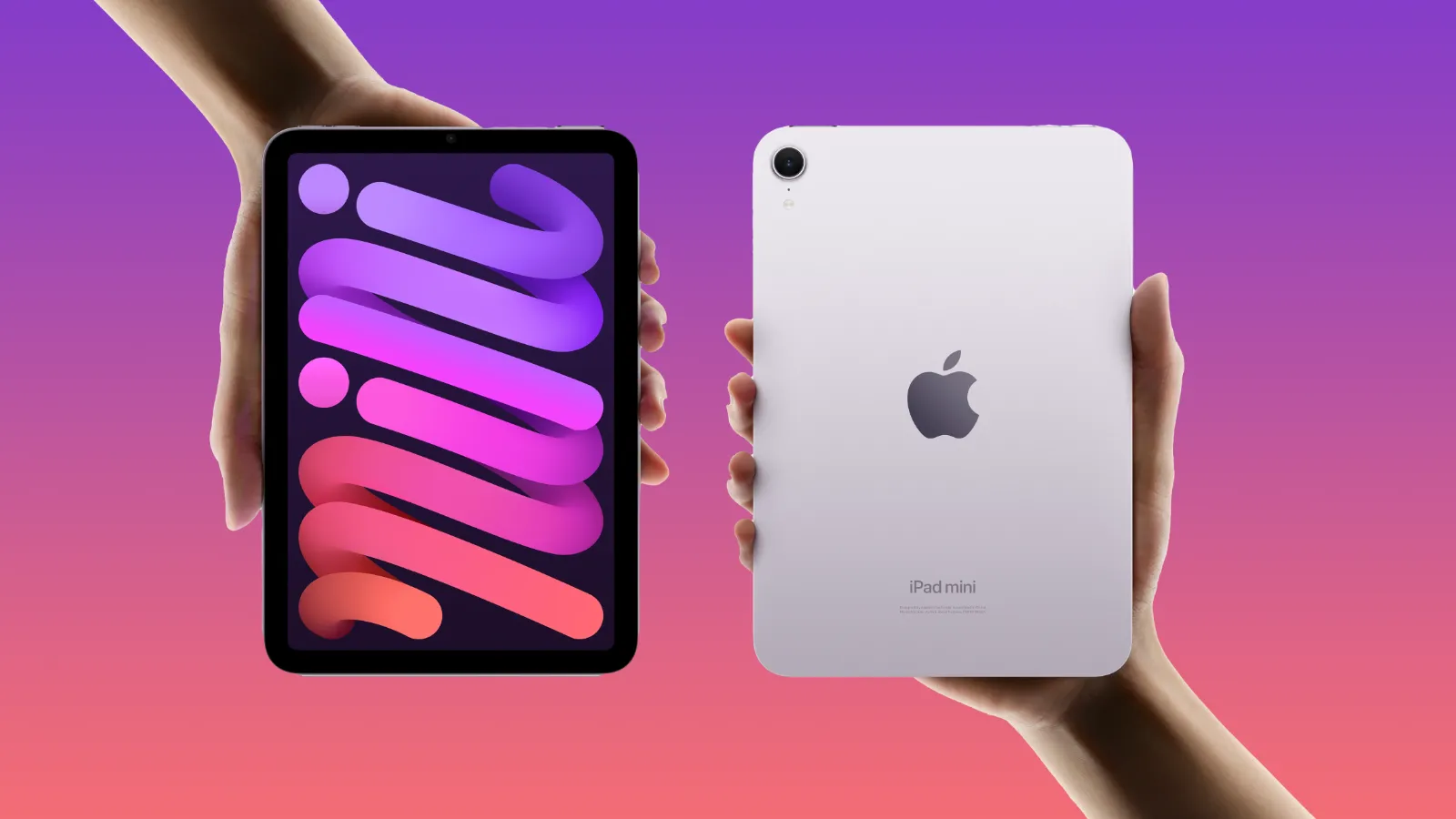
Apple's next-generation iPad mini is expected to get a major price hike, starting around $799/£799. This is a big jump compared to the product lines historical price points, and could potentially price out the devices’ existing user base of note-takers, readers and web browsers.
Rumoured Price Hike
Bloomberg's Mark Gurman has reported in his Power On newsletter that Apple's next iPad mini is on its way, and could be announced on the 27th October, just two weeks after Apple's Welcome Home product launch event.
The device is expected to get some major hardware improvements, including the latest A20 Pro chip, an OLED display and new speakers. Whilst these would be welcome improvements, the price is not. A $799 price point will place the iPad mini as the second most expensive iPad model available, positioning it above the iPad Air.
Apple usually matches its UK pricing against its US prices, so I'd expect a £799 price point in the UK if this rumoured price is true.
iPad mini Price History
The iPad mini has not always been positioned as a flagship device. When the first model launched in November 2012, it cost just £269. To put this into perspective, £269 in 2012 is the equivalent of £401.62 today, according to the Bank of England inflation calculator.
This is still a £397.38 difference from the rumoured price point, and is even cheaper than the £599 price of the current model.
The price of subsequent models remained in a similar region, with the second, third and fourth models all retailing for £319. The company then bumped the price up to £399 on it's fifth model, though this brought more powerful silicon and up-to-date hardware after a four year period of no refreshes for the product line.
2021 marked the first major external redesign of the iPad mini, bringing the all-screen design to the product line for the first time. This allowed Apple to justify the higher £479 price point.
Apple then brought Apple Intelligence to the iPad mini in 2024, starting from £499. In June 2026, the same iPad model got a £100 price hike to £599 due to the memory chip crisis.
This shows the iPad mini has always been towards the lower end of the iPad lineup up until 2026, where Apple was 'forced' to increase prices due to current supply chain circumstances.
How do people use iPad mini?
iPad mini is one of the most versatile iPad models available, used by a wide range of people with many different use cases.
However, after browsing the iPad mini subreddit, where someone asked people to share their use cases, these were the most common responses:
- Reading
- Note taking
- Media consumption
- Web browsing
- Gaming
Most of these tasks are lightweight, which don't require the power of an A20 Pro chip, and wouldn't massively benefit from an OLED display - both features that are expected on the newer model.
As an iPad mini owner, I can see the appeal of an OLED display. I mostly use mine for media consumption and note-taking, and a better display is something I've wanted for a while. However, even with those improvements, a rumoured £799 starting price would make me think twice about upgrading.
Are the upgrades worth it?
On a personal level yes, the upgrades are worth it. The viewing experience with an OLED display would be a substantial improvement I'd notice every time I pick up my iPad.
However, for a large proportion of iPad mini users who only use the device for note-taking, web browsing or reading, £799 is a hard sell. You would be unlikely to notice the improvements in your day-to-day use and it may feel like you spent an additional £300 on the same device.
For gamers however, the A20 Pro chip and OLED display would be a major upgrade performance wise, allowing you to play more graphic heavy games and have a more vibrant viewing experience with the improved colour contrast of the OLED panel.
Alternatives
Competition against the iPad mini has been heating up recently, with similar (albeit less powerful) tablets available in a similar form factor.
If you're a reader, Amazon's new Alexa Tablet 8 available from £199.99 could be the more compelling option. For about £600 less, you can get a similar form factor device with a larger 8.7-inch display, the same aluminium body and a dedicated Kindle app with settings to help improve your reading experience.
Of course, it has its downsides.
Some people will prefer Apple's iPadOS over Android, and the LCD 60Hz display will be a worse viewing experience than the rumoured OLED iPad mini, though it may provide a similar experience to the current iPad mini model.
Additionally, with 64GB of storage it has 50% less space than the current base model iPad mini, and the entry-level Alexa Tablet 8 comes with adverts in the operating system.
Will I upgrade?
I don't plan on upgrading just yet, as I have the current generation iPad mini (A17 Pro). Whilst I would love an OLED display, I'll hold off for a few more years, potentially for the next model to arrive. However, if Apple does debut this new model with a 120Hz ProMotion display, something which remains unclear, this could be a compelling upgrade.
Final Thoughts
An iPad mini that costs a rumoured $799 in the US, or potentially £799 in the UK, could price out some existing users, particularly those who primarily use the device for reading, note-taking and web browsing. However, these upgrades could also attract a new audience of performance-heavy users who want a premium experience in a compact design.
The price difference suggests Apple could be looking to position the next iPad mini as a more premium tablet. Perhaps the company is willing to lose some existing customers as part of this change.
The question remains if the upgrades will be compelling enough for existing iPad mini users to upgrade at a cost.