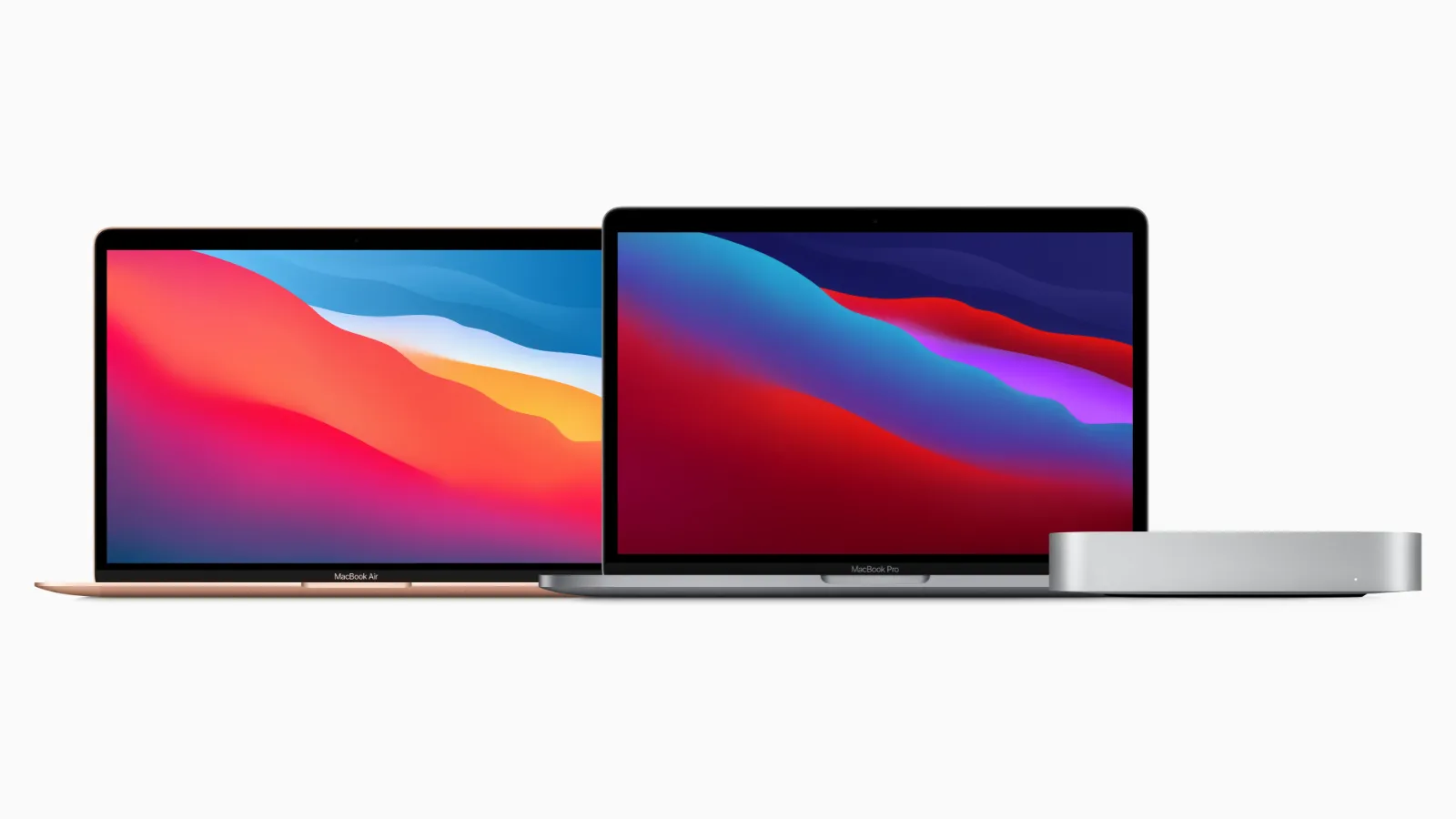
Today marks exactly six years since the release of the revolutionary M1 chip, which debuted in the MacBook Air, MacBook Pro and Mac mini providing vast improvements in performance, efficiency and battery life.
Six years later this set of Macs are credited for revitalising the Mac which had built up a somewhat infamous reputation in previous years from using slower, less efficient Intel processors to the questionable design choices such as the lack of ports and butterfly keyboard.
On Tuesday, 17th November 2020 the new M1 MacBook Pro, M1 MacBook Air and M1 Mac mini started arriving to Apple customers across the world. These Mac models did not receive a visual redesign, instead shipping with the same chassis as previous Intel models, but received major upgrades internally.
Apple announced the M1 chip a week prior on 10 November, touting the processor had an up to 3.5x faster CPU, 6x faster GPU and was 15x faster at machine learning than previous Mac models.
Additionally, the MacBook Air and MacBook Pro with M1 were said to last up to two-times longer than their predecessors, which is a major improvement in battery life.
The M1 chip, paired with macOS Big Sur also introduced additional capabilities, where Mac users could now run iPhone and iPad apps from their Mac. This greatly expanded the Mac App Store with thousands of iPad apps, and allowed the introduction of iPhone Mirroring later down the line with the release of macOS Sequoia in 2024.
When Apple first promoted M1, many were skeptical about how good the improvements could be until they got their hands on the devices themselves. These improvements helped boost Mac sales with then-CEO Tim Cook telling an earnings call in April 2021:
Fuelled by the M1, we set an all-time [Mac] revenue record continuing the momentum for the product category.
In fact, the M1-series of Macs were so good that people are still using them six years later with no plans or even need to upgrade yet. Despite this, Apple Silicon has continued to vastly improve the Mac lineup in the past six years.
Apple Silicon on the Mac timeline
In 2021, Apple finally redesigned the MacBook Pro ditching the Touch Bar for a physical row of function keys, increased the screen size and brought ports back to the Mac, including an HDMI port, SDXC card slot and additional Thunderbolt ports.
2021 also saw the first Apple Silicon iMac, which came with a full redesign and brought colour back to the iMac lineup (a throwback to the iMac G3).
A year later in 2022, Apple debuted M2 and introduced the redesigned MacBook Air that reintroduced MagSafe 3 for charging, increased the size of the screen and improved the thermal, fan-less design of the Air.
2022 also saw the return of first-party consumer displays with the launch of the Studio Display, paired with the all-new Mac Studio. Mac Studio is best described as a big Mac mini, but with significant performance improvements including the higher-end Max and Ultra chips.
In 2023, Apple refreshed the Mac Pro with an all-new M2 Ultra chip, the most powerful in the lineup, and continued to improve its Apple Silicon with M3.
2024 continued to revitalise the Mac with the fully redesigned M4 Mac mini that was smaller, cheaper and finally introduced front ports for easy access.
While Apple then had a smaller year for the Mac in 2025 with minor updates such as the M5 chip, 2026 has been the biggest year for the Mac since M1 was first introduced.
Every model has received a refresh this year, the Mac Pro was discontinued in favour of the Mac Studio, Apple introduced the best-ever M5 Ultra chip on their latest Mac Studio, the MacBook Pro received a Tandem OLED touchscreen display and Apple put a different type of Apple Silicon, the A18 Pro made for iPhone, in a new budget MacBook Neo model.
Final Thoughts
Those three M1 Mac releases in 2020 undoubtedly changed the computer industry forever. Apple brought life back to the Mac, which helped attract new customers who were using other Apple products but were yet to make the jump to Mac, including myself.
And with a new CEO at the helm of Apple, who helped spearhead hardware development of Apple Silicon Macs, and the big year we have just had for the Mac - the future of the product line looks very promising.